Best VPN for Tor - Privacy Comparison (2026)
The best vpn for tor question depends on what you're trying to protect against. A VPN hides the fact that you're using Tor from your ISP. Tor hides what you're doing from the VPN. Used together properly, they complement each other. Used wrong, they can actually reduce your privacy. Here's how to evaluate VPN providers specifically for Tor usage, with practical comparisons based on verifiable criteria rather than marketing claims.
Tor-over-VPN vs VPN-over-Tor
There are two ways to combine a VPN with Tor. They do different things.
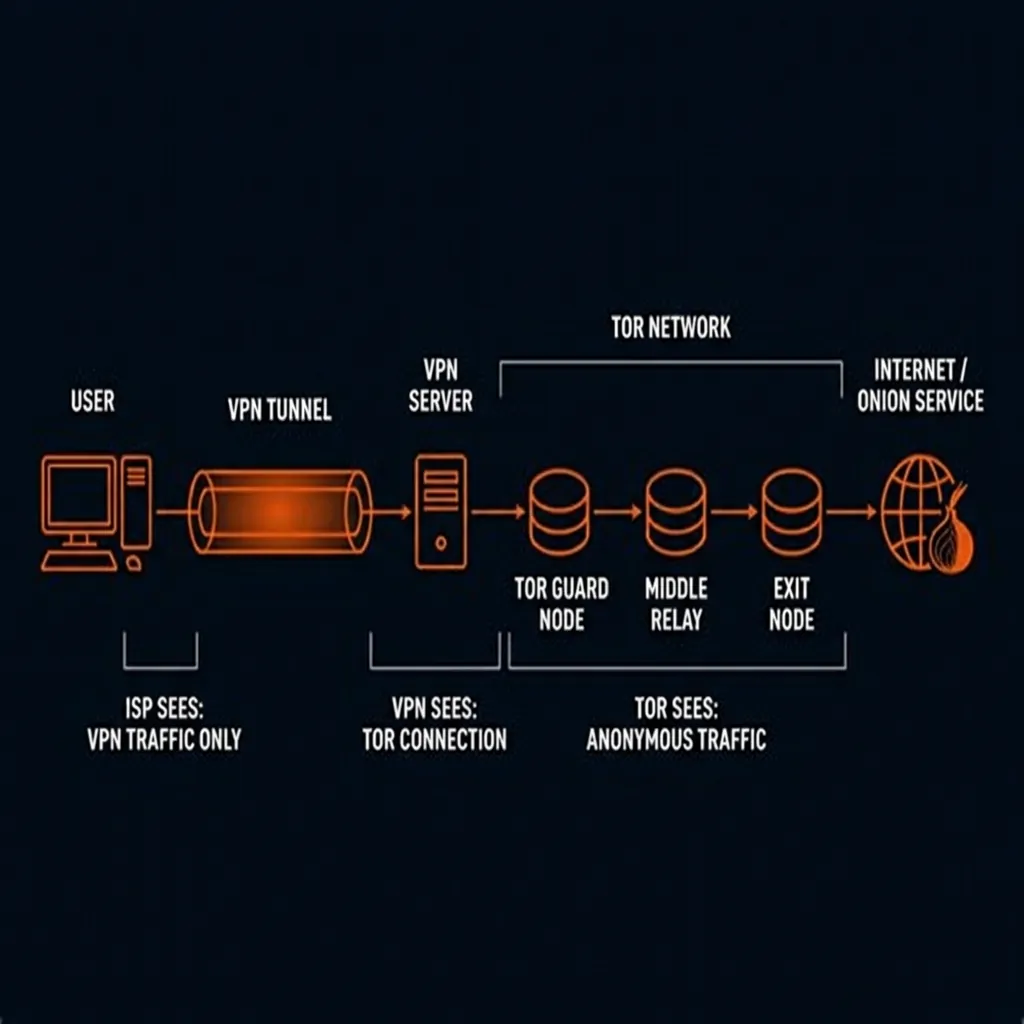
Tor-over-VPN means you connect to the VPN first, then open Tor Browser. Your ISP sees VPN traffic. The VPN provider sees that you're connecting to a Tor guard node, but not what you're doing on Tor. The Tor entry node sees the VPN's IP address, not yours. This is the more common configuration and the one most people should use.
VPN-over-Tor means Tor connects first, then the VPN runs through the Tor circuit. This is technically more complex, requires specific VPN configurations that most providers don't support, and creates a fixed exit point (the VPN server) that can be monitored. This configuration has very specific use cases and generally makes things worse for most people. If you're not sure which to use, go with Tor-over-VPN.
The Tor Project itself has a nuanced position on VPNs — they acknowledge that a VPN can prevent your ISP from seeing Tor usage, but they also note that you're shifting trust from your ISP to the VPN provider. That trade-off is worth understanding. Your ISP is subject to your local jurisdiction's surveillance laws. Your VPN provider is subject to wherever they're incorporated. Pick the one you trust less and put the other in front of it.
What to Look for in a VPN for Tor Usage
Marketing says every VPN is "the best vpn for tor." Verifiable criteria tell a different story. Here's what actually matters.
No-log audits. Any VPN can claim "no logs." The ones worth trusting have had independent third-party audits confirming that claim. Mullvad was audited by Cure53 in 2020. IVPN was audited by Cure53 in 2022. ProtonVPN commissioned audits by Securitum. If a provider hasn't published a third-party audit, their no-log claim is just marketing.
Jurisdiction. Where the company is legally incorporated determines what law enforcement can compel them to do. Sweden (Mullvad), Gibraltar (IVPN), and Switzerland (ProtonVPN) have stronger privacy protections than providers based in Five Eyes countries (US, UK, Canada, Australia, New Zealand). This matters because a VPN that logs nothing today could be compelled to start logging tomorrow under a sealed court order, depending on jurisdiction.
Payment methods. If you pay for a VPN with a credit card, you've linked your real identity to the service. The best vpn for tor usage accepts Monero or cash payments. Mullvad accepts cash mailed to their office — no account email required. IVPN accepts Monero. ProtonVPN accepts Bitcoin (though Bitcoin's public ledger makes it less private than Monero — see our cryptocurrency privacy analysis).
Kill switch reliability. If the VPN connection drops, your traffic should stop — not fall back to your regular connection. A kill switch prevents this fallback. Test it yourself by disconnecting the VPN while Tor is running and checking if traffic leaks. Some providers have had documented kill switch failures on specific operating systems.
VPN Provider Comparison for Tor
Based on audited privacy practices, jurisdiction, and Tor compatibility as of early 2026:
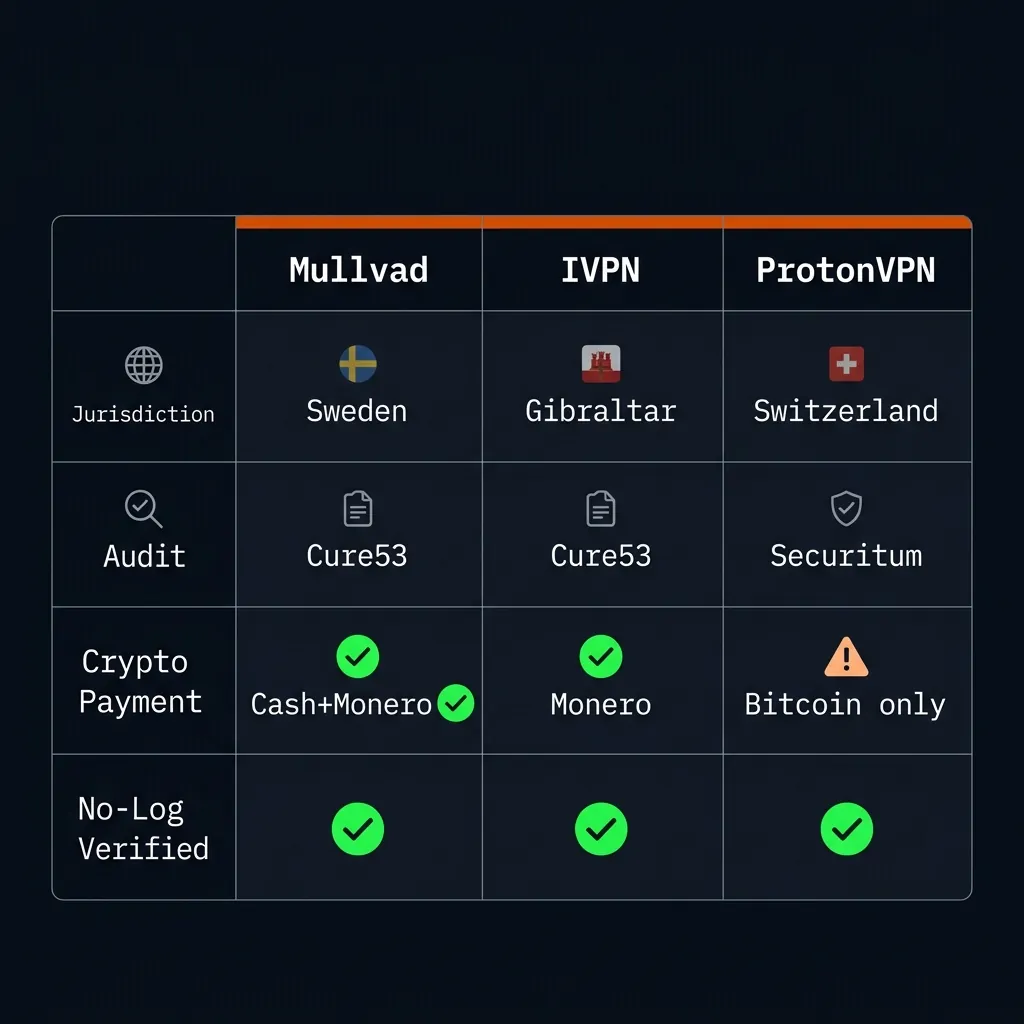
Mullvad VPN. Based in Sweden. Audited by Cure53. Accepts cash and Monero. No email required for account creation — you get a random account number. WireGuard and OpenVPN support. In April 2023, Swedish police conducted a search of Mullvad's offices and left with nothing because there were no logs to take. That's the kind of real-world test that matters more than marketing pages.
IVPN. Based in Gibraltar. Audited by Cure53. Accepts Monero. Open-source client applications. Supports multi-hop VPN configurations, which add a second VPN server to the chain (VPN → VPN → Tor for maximum separation). Smaller server network than commercial competitors, but the operational security practices are well-documented.
ProtonVPN. Based in Switzerland. Audited by Securitum. Free tier available (but the free tier has limitations that affect Tor usage — slower speeds and fewer servers). Accepts Bitcoin but not Monero. Integrated with Proton Mail's ecosystem. Larger server network than Mullvad or IVPN, but the Swiss legal framework, while strong, has been tested by international cooperation requests.
When a VPN Doesn't Help
A VPN doesn't fix bad OPSEC. If you log into a personal account while connected to a VPN and Tor, the VPN didn't protect you — your login did the identifying. VPNs protect the network layer. They don't protect the application layer. If you reuse usernames, share identifying information, or skip PGP verification on onion addresses, a VPN doesn't undo those mistakes.
A VPN also doesn't protect you from compromised exit nodes on the Tor network. The exit node sees the traffic leaving Tor. If that traffic is unencrypted (HTTP, not HTTPS), the exit node can read it regardless of whether a VPN is in the chain. For .onion addresses this isn't an issue — onion services use end-to-end encryption without exit nodes. But for clearnet browsing through Tor, the exit node is a real threat.
For a deeper understanding of how Tor circuits work and where the security boundaries are, see our onion routing architecture guide. And for the broader context of operational security practices that complement VPN usage, the operational security fundamentals page covers the full picture. If you're looking for the current verified addresses, the DrugHub market page has the latest PGP-checked listing, and the DrugHub onion links page tracks mirror status and rotation history.
Frequently Asked Questions About VPNs and Tor
Should I use a VPN with Tor?
It depends on your threat model. If your primary concern is hiding Tor usage from your ISP, a VPN helps. If your concern is anonymity on the Tor network itself, Tor already handles that — a VPN adds marginal benefit. The strongest argument for a VPN is that it prevents your ISP from knowing you use Tor, which may matter depending on your jurisdiction and local laws.
Can my VPN provider see what I do on Tor?
In a Tor-over-VPN configuration, the VPN provider sees that you're connecting to a Tor guard node. They cannot see your Tor traffic because it's encrypted through multiple layers before it reaches the VPN tunnel. They know you use Tor. They don't know what you do on Tor. This is why a no-log VPN matters — even the limited metadata they could observe (Tor connection times, data volumes) should not be stored.